
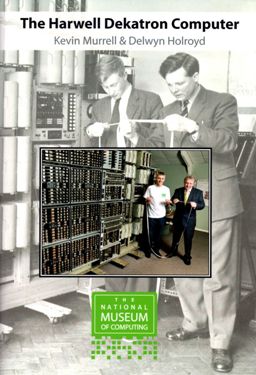
 The National Museum of Computing (TNMOC,www.tnmoc.org) in Britain has published a book about the world?s oldest working digital computer. Taking up the entire wall of a room, the Harwell Dekatron, later known as the WITCH (Wolverhampton Instrument for Teaching Computing from Harwell) is the subject of the book that traces the history of the computer, and presents great many images as illustration.
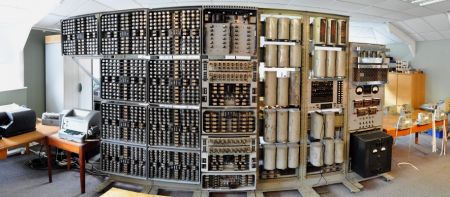 The replica of the machine, which was designed in 1949 and set to operation in 1951 at the Atomic Energy Research Establishment in Harwell, was restored and rebooted by volunteers in 2012. The original machine was used for mathematical modelling; multiplying two numbers could even take ten seconds, but it worked perfectly. By 1957, however, it became obsolete, and the machine was given to the Wolverhampton Institute of Technology. Researchers at Wolverhampton recognised the potentials of the machine in education, and renamed it WITCH. The computer was in operation until 1973, when it was transferred to the Birmingham Museum of Science and Industry. The institution was closed in 1997; the machine was dismantled and kept in storage.
The WITCH, still operational, is one of the TNMOC stars. It is used for educational purposes to demonstrate the early period of information technology, and to give students an insight into the operation of a museum-piece computer in order to get an idea how computers worked at the beginning of the 1950s.
The Harwell Dekatron Computer was written by Kevin Murrell and Delwyn Holroyd, who rediscovered and restored the Methuselah in 2008. The book can be ordered at amazon.com.