
The last 16-bit operating system, Windows 3.1, codenamed Janus, was released by Microsoft in April 1992. A number of improvements were introduced compared to 3.0 such as a basic level support for multimedia or the TrueType font system. It had Hungarian relevance as well: 3.1 was the first Windows that was published in a Hungarian language version.
It had a minimal hardware requirement of a 286 processor, 1 MByte RAM, EGA or Hercules monitor, and MS-DOS 3.10. It was the first of the Windows that no longer ran on IBM XT. It introduced a Windows tutorial as well as screen savers. One of the most significant elements that still exerts serious impact on office work today was the Minesweeper, which was included in this version for the first time. Microsoft ended support for 3.1 in 2001.
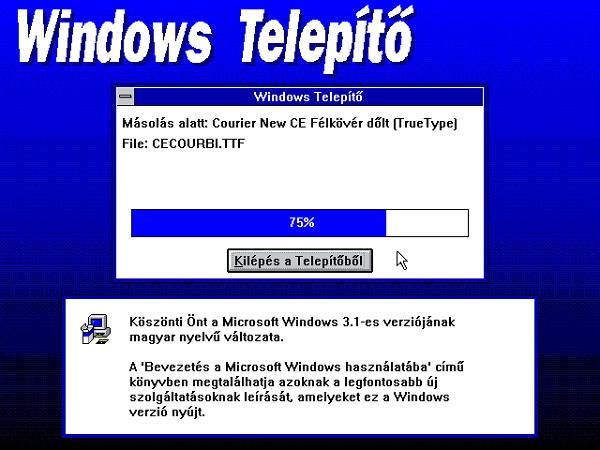
In terms of architecture, Windows 3.1 required more than the capabilities of the 8086, and made use of the extended addressing mode of the 80286 (overcoming the 640 KB barrier) as well as the possibilities of virtual memory management and the privileged mode of the 80386 or later CPUs. Windows allocated memory for programmes, and if memory was insufficient, then recently unused portions were stored in the virtual memory.
Also introduced with Windows 3.1, the registry comes under dual judgement. The system and the applications installed still rely on this specific tree-structure database. It makes the relocation of programmes difficult, and slows down the system after a while. Nevertheless, Microsoft seems to consider it to be the optimal solution as Windows 8.1 also contains it.
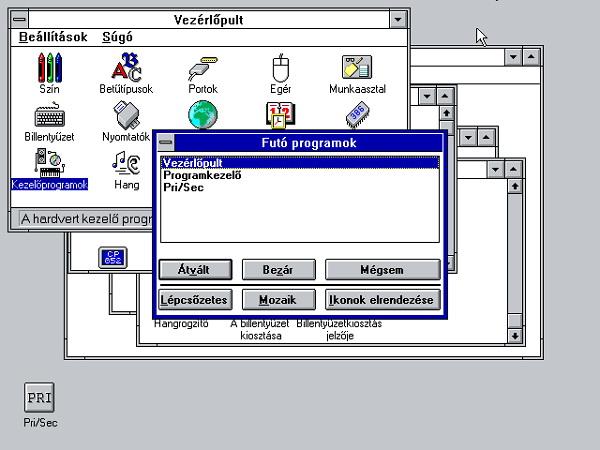
However, no matter how much praise goes for the virtues of Windows 3.1, no matter how much better it was compared to its predecessors, it could not be described as stable. The task manager had limited influence on programmes, and the system was not always able to carry through what had been intended. As a consequence, it frequently occured that a badly running application brought the entire system down, and collapse became inevitable.