
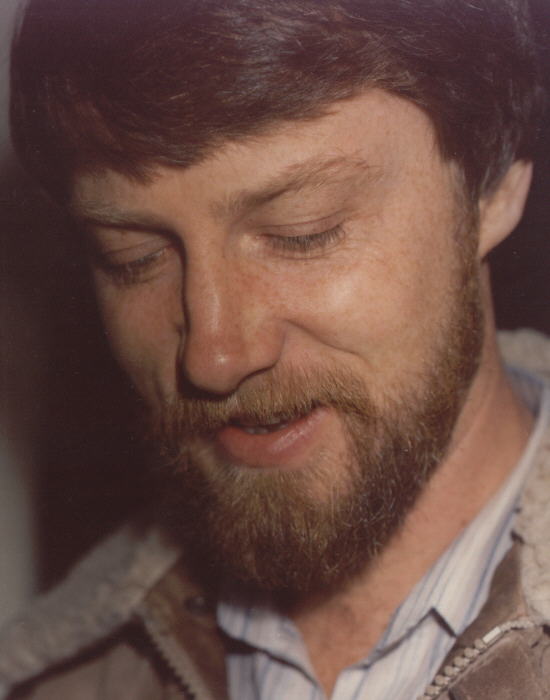
Gary Arlen Kildall was born on 19 May 1942. Kildall was the computer scientist who developed the highly successful CP/M operation system, and founded Digital Research Inc. His legend evolved from a mysterious story about the unsuccessful negotiations and failure to license CP/M for IBM in 1980. Kildall was recommended to IBM by Bill Gates, but after the failure to reach an agreement, it was Gates who contracted with IBM, and licensed MS DOS 1.0, which is considered by many to be the copy of CP/M. Kildall died of a head injury in 1994.
Kildall was born in Seattle, Washington state. He attended the University of Washington to become a mathematics teacher, but he soon grew interested in computer science. After receiving his degree, he got a teaching job with a naval school in Monterey, California. His interest and the close geographical proximity (Monterey is an hour?s drive from the Silicon Valley) led the way to Intel that released the first commercially marketed microprocessor in 1971. Kildall had such a great interest in processors that he bought one right away, and wrote programmes for it. At the same time, he managed to assist in the work at Intel as a consultant, and thus he was able to gain first-hand information about CPUs.
After Kildall had been awarded his doctorate in computer science in1972, he returned to teaching at the navy. In the meantime, he published an extremely significant paper in which he introduced the concept of data-flow analysis which has been used in compilers to optimise execution ever since.
At Intel, Kildall also had access to 8008 and 8080 processors, and as a result he developed the first high-level programming language for microprocessors, PL/M in 1973. He completed the (ill-)famed CP/M operating system in the same year, but Intel showed more interest in PL/M at the time.
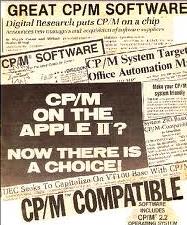
Nevertheless, Kildall saw great potentials in CP/M, so he and his wife, Dorothy established their own company, and planned to sell the operating system through advertisements placed in computer hobbyist magazines. The breakthrough came when they licensed the OS for the IMSAI 8080, one of the clones of MITS Altair 8800. An increasing number of manufacturers started to use CP/M, and the software became de facto standard. Next, Kildall set to work out the concept of a BIOS, a programme package that was stored in the hardware, and enabled the CP/M operating system to run on different systems without modification. At its peak in 1981, CP/M ran on 3000 different computer models, and yielded an annual revenue of 5.4 million dollars for Digital Research.
Practically, there is no reliable information available about the famous dealings, all negotiators have a different recollection of what happened. Bill Gates repeatedly stated to journalists that Kildall could only blame himself, and his own irresponsible and negligent attitude in the negotiations that eventually prevented CP/M from taking on the role which PC-DOS (later MS-DOS) fulfilled. Gary Kildall denied this both in speech and writing, and accused IBM of a pricing trick. Kildall put the blame on Gates as well, and said ?he has taken much from me and the industry?, because he was convinced that the PC-DOS was ?a plain and simple theft?. IBM hardly ever made any comments on what had happened, and never disclosed any facts, only restricted to denying Kildall?s allegations.