
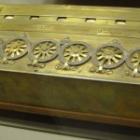
News provider on hardware, Tom's Hardware has compiled a list of the most iconic machines in computing history.
Current news

After one and a half years open for visitors, the extraordinary exhibition “The Antikythera Shipwreck: the Ship, the Treasures, the Mechanism” was closed on 31 August/has been prolonged until 2 January 2014 at the National Archaeological Museum in Athens, Greece.
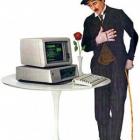
IBM’s first personal computer was launched in the market 32 years ago on 12 August 1981. The IBM 5150 could systemise data, process text and handle spreadsheets.

A miniature Lego model of the legendary World War Two computer, the Colossus was built and put on display at the National Museum of Computing.

After a successful fund-raising campaign, the British Centre for Computing History, founded in 2006, was re-opened in Cambridge on 27 July, in a ground area of nearly 300 square metres, a site larger than the previous facility.

Microsoft introduced their Office program package on 1 August 1989. The word ?office? was initially intended for marketing purposes to designate a bundled set of office applications.

Intel Corporation was founded 45 five years ago on 18 July 1968 by Gordon E. Moore, famed for his law, and Robert Noyce. Originally, Intel was an American company that grew to be international with time.

The technology focussed magazine Techradar online put together a fascinating list of ten British scientists who shaped and influenced the development in computing to a significant extent.

World- renowned magazine IEEE Spectrum did an enthralling interview with Intel’s engineer Ajay Bhatt, who invented the universal serial bus port 25 years ago, and developed USB 2.0 and 3.0.

Before the advent of computers, special-purpose hardware was used to solve calculating problems even in fields that are rarely mentioned in studies on history.