

Jan A. Rajchman, a Polish electrical engineer and, more importantly, a computer pioneer, was born in London on 10 August 1911.
Current news
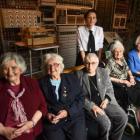
On 3 June, the National Museum of Computing (TNMOC) in Britain presented for the first time how Lorenz, Hitler's top-secret machine worked and how it was deciphered by legendary code-breakers, which shortened World War Two.
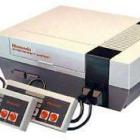
The company has decided to release a new edition of the Nintendo Entertainment System (NES) named Nintendo Classic Mini, which resembles the console launched in 1985 (1983 in Japan) on the outside most of all.
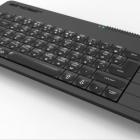
The British company SpecNext Ltd. pays tribute to Sir Clive Sinclair' classic ZX Spectrum+ with a machine named ZX Spectrum Next.
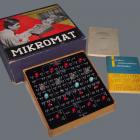
The Hungarian Province of the Piarist Order and the John von Neumann Computer Society organised a temporary exhibition to pay homage to two Piarist teachers: József Öveges, who was born 120 years ago, and Mihály Kovács, born a hundred years ago.
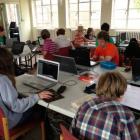
The National Museum of Computing in Britain (TNMOC) is to hold the Week of Code for young programmers from 10.00 to 17.00 daily between 1 and 5 August.
The town Milton Keynes in England will celebrate the 50th anniversary of its foundation next year.
On 2 June 1996, Netscape released its Navio Navigator browser and announced that it would focus on the non-PC world (mainly game consoles, Nintendo products, set-top boxes, and televisions).
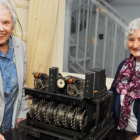
A component of a World War Two coding machine, which was used by Hitler and his generals to exchange coded messages, was found in a garden shed in Essex.
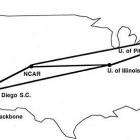
The Pittsburgh Supercomputer Center was opened on 9 June 1986 thirty years ago with the aim to support the forerunner of modern internet, the network of the National Science Foundation (NSFNET)