
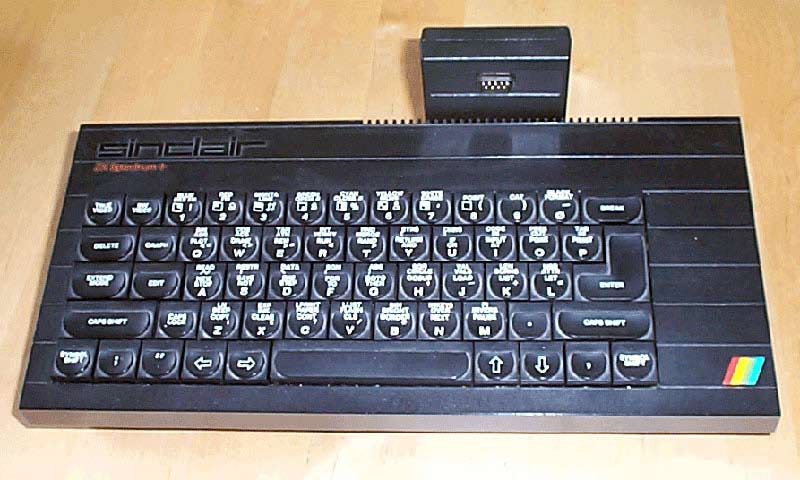
Introduced at the Computer Trade Show in Barcelona in the autumn of 1985, ZX Spectrum+ 128 was released in the United Kingdom in February 1986. It looked similar to Spectrum+, but it had even larger ventilation slots. Taking a close look at the computer, we can discover three more ports than in the great predecessor: RS232, RGB monitor, keypad ports. It had a new operating system that could be switched between 128K mode and 48K mode, and it also possessed a three-channel sound generator. Knowing that the Z80 is an 8-bit processor, you might ask the question how it can address more than 64K memory. The solution is simple. The memory should be divided into blocks, and the relevant memory segments retrieved by switching in and out. Perhaps this was the forerunner of EMS memory! Only 48K memory could be used directly in Basic, the rest was RAM-DISK. The built-in Basic programming language did not change much. The editor became full screen, and you had to enter commands letter by letter. The 128K Spectrum was able to play digital sounds, which is utilised by many programmes today. The machine was able to play music in stereo with minimal intervention and financial input. The ZX Spectrum+ 128 was fully compatible with other Spectrum models, and could practically run all programmes written for the 48K version.
However, barely two months later Sinclair Research came to an end: on 7 April, Amstrad, headed by Alan Sugar, purchased the complete product range of Sinclair Research Ltd. and the right to use the Sinclair brand for mere 5 million British pounds. For an additional 11 million pounds all Sinclair’s unsold products in stock were bought, and QL machines were instantly discontinued. Development gained new impetus, but development work on Spectrum was abandoned, it was increasing market share that Amstrad aimed at as it turned out later on.