
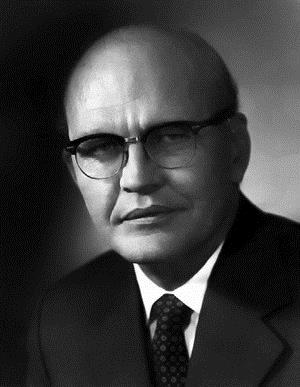
 The first integrated circuit (IC) was created by Jack Kilby (1923-2005), engineer at Texas Instruments in 1958, and it was demonstrated on 24 March, 1959. IC also had a second father in the person of Robert Noyce (1927-1990), the researcher of Fairchild Semiconductor, who created his own circuit six months after Kilby. However, the slower pace of work allowed Noyce to find solutions to a number of design problems that the researcher of Texas Instruments had failed to notice. Noyce discovered that silicon was a much better material for chips than germanium used by Kilby.
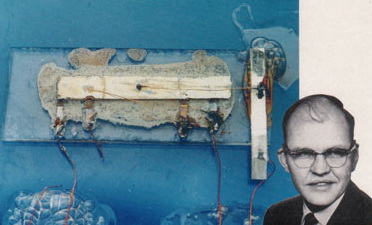 Initially, integrated circuits did not raise much interest in the industry. As recollected by Kilby, ICs were much rather treated as entertaining elements of science fiction at professional events in the next few years. It was only the army that expressed more serious interest: the new technology was used in the Minuteman missile guidance electronics as well as in the guidance system of space devices in the Apollo programme. Orders placed by the army made mass-production possible and circuits, priced one thousand US dollars at the pilot stage, were later marketed at a twenty-five-dollar unit price.
ICs introduction in the market ran into difficulties also as a consequence of a patent war between Fairchild and Texas Instruments. The dispute about patenting the concept of the integrated circuit lasted until 1964, and the two firms managed to reach an agreement only six years after IC's actual invention. After the licensing of the invention was settled, the first product to contain IC was the pocket calculator, which is also one of Kilby's achievements.